Retirement Education Course for Ages 55+

REGISTER HERE
LEARN ABOUT IMPORTANT FINANCIAL TOPICS
Florida Gulf Coast University
Cohen Center – Room 162
10501 FGCU Blvd. S.
Fort Myers, FL 33965
Florida Gulf Coast University
Cohen Center – Room 162
10501 FGCU Blvd. S.
Fort Myers, FL 33965
Tuesday, April 2
6:00 p.m. to 8:00 p.m.
Florida Gulf Coast University
Cohen Center
10501 FGCU Blvd. S.
Room 162
Fort Myers, FL 33965
Map
Wednesday, April 8
6:00 p.m. to 8:00 p.m.
Florida Gulf Coast University
Cohen Center
10501 FGCU Blvd. S.
Room 162
Fort Myers, FL 33965
Map
Please call us at 239-288-1575 if you have any questions.
REGISTER HERE
LEARN ABOUT IMPORTANT FINANCIAL TOPICS
Florida Gulf Coast University
Cohen Center – Room 162
10501 FGCU Blvd. S.
Fort Myers, FL 33965
Florida Gulf Coast University
Cohen Center – Room 162
10501 FGCU Blvd. S.
Fort Myers, FL 33965
6:00 p.m. to 8:00 p.m.
Florida Gulf Coast University
Cohen Center
10501 FGCU Blvd. S.
Room 162
Fort Myers, FL 33965
Map
6:00 p.m. to 8:00 p.m.
Florida Gulf Coast University
Cohen Center
10501 FGCU Blvd. S.
Room 162
Fort Myers, FL 33965
Map
Please call us at 239-288-1575 if you have any questions.
Course for Retirees Age 55+
Why attend?
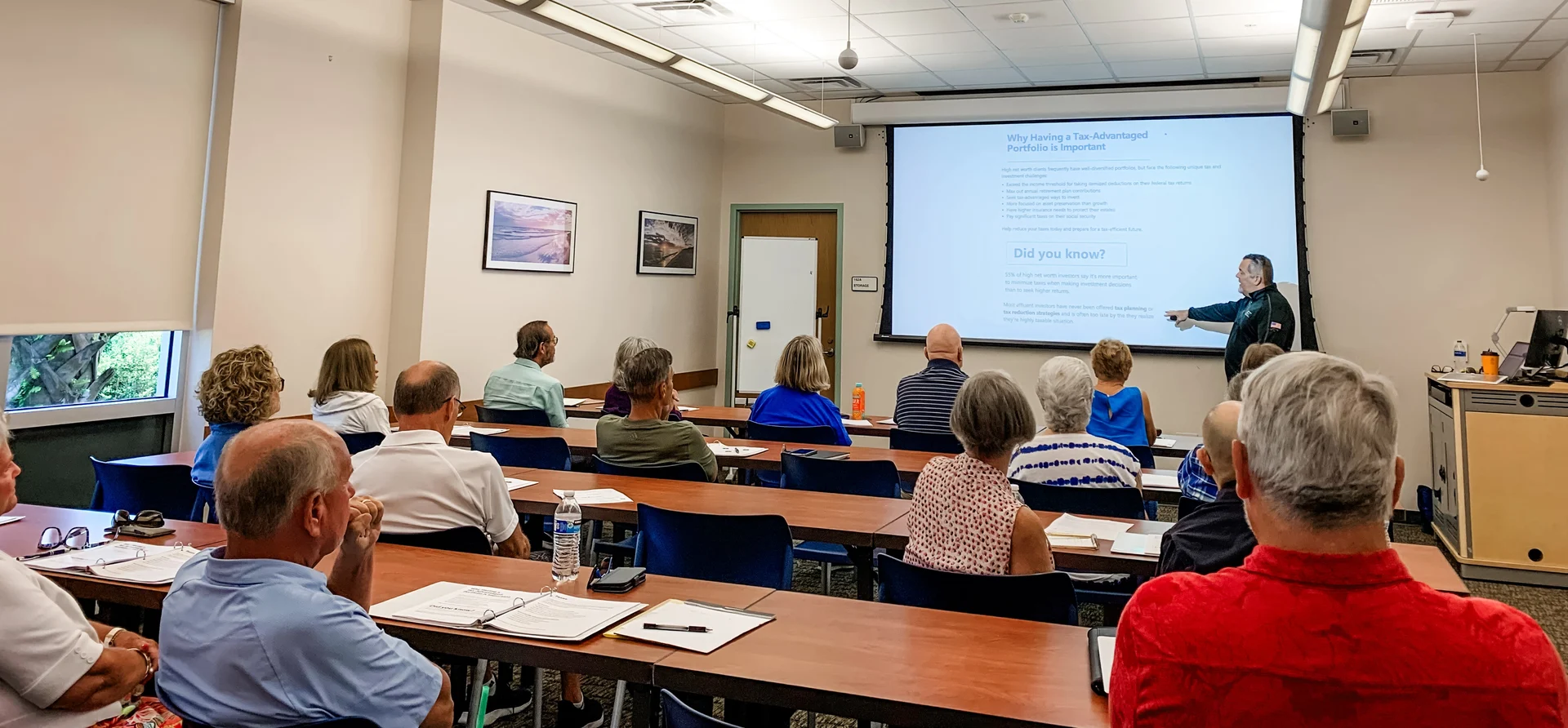
For those aged 55+ who are nearing or already in retirement, attending a Retirement Wealth Academy course centered around the 5 key elements needed for a successful retirement is crucial. This course provides invaluable insights into critical areas such as income planning, taxation in retirement, and investments. By understanding these key elements, attendees can make informed decisions that ensure financial stability, protect their assets, and enhance their quality of life during retirement. Don’t miss this opportunity to gain the knowledge and tools to help you live a secure and fulfilling retirement.
COURSE AGENDA
Once you retire, you stop receiving a paycheck from work — but your need for income doesn’t stop. Now it’s up to you to turn your savings into a steady income that lasts for the rest of your life. You’ll need to plan for market ups and downs, rising prices, health costs, and more. In this section, we’ll show you how to create income to support your Florida lifestyle with confidence.
This section will discuss:
- Estimating monthly income from Social Security, pensions, investments, rentals, and other resources.
- How to turn your savings, Social Security, and other benefits into streams of income.
- When to claim Social Security benefits to receive more income and pay less in taxes.
- IRAs and Roth IRAs — and how converting to a Roth might help reduce taxes in retirement.
- Whether it’s better to take your pension as a lump sum or monthly check.
- What annuities are, how they work, and where they may (or may not) fit in a retirement income plan.
- When and how to take money out of your accounts without paying more taxes than necessary.
- Strategies to grow your income over time so it keeps pace with inflation.
- Simple ways to help make your money last — no matter how long you live.
- Why having a written, clear income plan can help you feel more in control of your retirement.
Entering retirement means managing more than just your income — it also means paying close attention to your taxes. Without proper planning, taxes can take a bigger bite out of your retirement savings than expected. In this section, we’ll explore practical strategies to help you keep more of what you’ve earned and avoid common tax pitfalls in retirement.
This section will discuss:
- When converting traditional IRA funds to a Roth IRA might help lower your future taxes.
- The best order to withdraw money from your accounts to reduce how much you owe in taxes.
- Ways to manage Required Minimum Distributions (RMDs) to avoid tax surprises.
- Directing charitable gifts from your IRA to satisfy your RMD and reduce your taxable income.
- Strategies to keep your retirement income within a lower tax bracket by spreading out withdrawals over time.
- How legislative risk could impact your taxes in retirement.
Your portfolio and its diversification should be determined by prioritizing your goals, objectives, and needs. With proper planning your purpose should determine placement of your investments. This section will discuss your investments and help you determine if they are appropriate for your needs.
This section will discuss:
- Getting you reacquainted with your portfolio.
- Identifying strengths and weaknesses in your holdings.
- How volatility, risk, inflation, and withdrawals can impact your portfolio.
- Stocks vs. bonds vs. ETFs.
- Assessing your personal risk tolerance.
- When and how to adjust your portfolio to maintain your desired risk balance.
- Ways to create steady income from your investment portfolio.
Health care can become one of the biggest expenses in retirement — and it’s often unpredictable. This section will help you plan ahead for medical costs and protect your retirement savings from unexpected expenses.
This section will discuss:
- Planning ahead for long-term care and exploring ways to offset/manage the costs.
- Anticipating out-of-pocket medical expenses not covered by insurance.
- How HSAs can help cover medical costs in retirement with tax advantages.
- Why health care proxies, living wills, and other directives are important for future care decisions.
Planning ahead isn’t just about protecting your money — it’s about protecting your family from unnecessary stress and making sure your wishes are honored. Without the right documents and structure in place, your loved ones could face delays, legal fees, and confusion. In this section, we’ll walk through practical steps you can take to keep control over what happens to your assets and leave behind a legacy that reflects your values.
This section will discuss:
- Wills vs. Trusts – what’s the difference and do you need one?
- Making sure your assets go to the right people, without delays or legal hassles.
- Strategies to help keep your estate out of probate.
- Key legal documents every retiree should have in place.
- Ways to leave a legacy to your loved ones, favorite charities, or causes.
- How taxes may affect what you pass on – and steps to help reduce that burden.
You’ll learn how to:
Discover ways to shield your retirement funds from market turbulence and economic uncertainty.
Design a sustainable income plan that lasts throughout your retirement years.
Create tax-free income in retirement with strategic Roth conversion planning.
Build a retirement plan that lets you fully embrace the Florida lifestyle.

COURSE AGENDA
In today’s world, retirement is different than even when our parents retired and probably will last longer. What are your goals and objectives in retirement and how do you want yours to look like, feel like, and be like? With inflation, rising healthcare costs, and market volatility, many retirees are concerned about their money lasting.
This section will discuss:
- How do we start building for a dream retirement?
- How to live a purposeful and rewarding retirement.
- How socializing and staying active can play a role.
Once into retirement, you want to know that your money is going to last and not jeopardize your Florida lifestyle. Find out what has changed and what are the biggest concerns and hurdles for investors. You’ll also learn 6 ways to identify a recession.
This section will discuss:
- Estimate your monthly lifestyle expenses.
- Estimate your monthly income sources from Social Security, pensions, investments, rentals, and other available resources.
- Determine your monthly distributions.
- How to factor in taxes and inflation.
- Understanding the importance of your rate of return.
- How do you properly plan for retirement?
- How legislative risk could impact your retirement.
Your portfolio and its diversification should be determined by prioritizing your goals, objectives, and needs. With proper planning your purpose should determine placement of your investments. This section will discuss your investments and help you determine if they are appropriate for your needs.
This section will discuss:
- Let’s get you reacquainted with your portfolio.
- How to identify the strengths and weaknesses of your portfolio.
- Learn about volatility, risk, inflation, and withdrawals.
- Learn how to create accountability.
- Stocks vs. bonds vs. ETF’s.
- How investment behavior impacts your emotions and decisions.
Once you are retired, you are now unemployed, and typically you now have to create your own paycheck. You also have to make sure that it lasts, addresses market volatility, inflation, health care, and so much more. In the section, we’ll go through ways to create income to sustain your Florida lifestyle.
This section will discuss:
- Learn the requirements of an income strategy.
- How to create streams of income.
- Why having an income plan answers a majority of questions.
- Learn about making sustainable monthly withdrawals.
- How to create imperishable income.
- Social Security Strategies & Taxes.
- IRAs, Roth IRAs & Roth IRA Conversion.
- Should you take a lump sum or payment option for your pension?
- Required Minimum Distributions.
- How to create increasing income to offset inflation.
In this section you’ll learn the good, bad, and the truth about annuities. You have questions; we have answers. Find out if an annuity is either right or wrong for you. Find out if different income strategies that can be built could be a better fit than cash or CD’s.
This section will discuss:
- What is an annuity?
- How could an annuity fit in to your plan?
- Discover the living benefits of some annuities.
- Differences between annuity types.
- How to create your personal pension plan from an annuity.
YOUR INSTRUCTOR

Your instructor is Eric Kearney, an Investment Advisory Representative of Retirement Wealth Advisors LLC. (RWA).
Investment Advisory Services offered through Retirement Wealth Advisors, Inc. (RWA) an SEC Registered Investment Advisor.
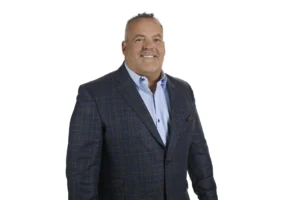
Your instructor is Eric Kearney, an Investment Advisory Representative of Retirement Wealth Advisors LLC. (RWA).
Investment Advisory Services offered through Retirement Wealth Advisors, Inc. (RWA) an SEC Registered Investment Advisor.
You’ll learn how to:
Discover ways to shield your retirement funds from market turbulence and economic uncertainty.
Design a sustainable income plan that lasts throughout your retirement years.
Create tax-free income in retirement with strategic Roth conversion planning.
Build a retirement plan that lets you fully embrace the Florida lifestyle.
COURSE AGENDA
Once you retire, you stop receiving a paycheck from work — but your need for income doesn’t stop. Now it’s up to you to turn your savings into a steady income that lasts for the rest of your life. You’ll need to plan for market ups and downs, rising prices, health costs, and more. In this section, we’ll show you how to create income to support your Florida lifestyle with confidence.
This section will discuss:
- Estimating monthly income from Social Security, pensions, investments, rentals, and other resources.
- How to turn your savings, Social Security, and other benefits into streams of income.
- When to claim Social Security benefits to receive more income and pay less in taxes.
- IRAs and Roth IRAs — and how converting to a Roth might help reduce taxes in retirement.
- Whether it’s better to take your pension as a lump sum or monthly check.
- What annuities are, how they work, and where they may (or may not) fit in a retirement income plan.
- When and how to take money out of your accounts without paying more taxes than necessary.
- Strategies to grow your income over time so it keeps pace with inflation.
- Simple ways to help make your money last — no matter how long you live.
- Why having a written, clear income plan can help you feel more in control of your retirement.
Entering retirement means managing more than just your income — it also means paying close attention to your taxes. Without proper planning, taxes can take a bigger bite out of your retirement savings than expected. In this section, we’ll explore practical strategies to help you keep more of what you’ve earned and avoid common tax pitfalls in retirement.
This section will discuss:
- When converting traditional IRA funds to a Roth IRA might help lower your future taxes.
- The best order to withdraw money from your accounts to reduce how much you owe in taxes.
- Ways to manage Required Minimum Distributions (RMDs) to avoid tax surprises.
- Directing charitable gifts from your IRA to satisfy your RMD and reduce your taxable income.
- Strategies to keep your retirement income within a lower tax bracket by spreading out withdrawals over time.
- How legislative risk could impact your taxes in retirement.
Your portfolio and its diversification should be determined by prioritizing your goals, objectives, and needs. With proper planning your purpose should determine placement of your investments. This section will discuss your investments and help you determine if they are appropriate for your needs.
This section will discuss:
- Getting you reacquainted with your portfolio.
- Identifying strengths and weaknesses in your holdings.
- How volatility, risk, inflation, and withdrawals can impact your portfolio.
- Stocks vs. bonds vs. ETFs.
- Assessing your personal risk tolerance.
- When and how to adjust your portfolio to maintain your desired risk balance.
- Ways to create steady income from your investment portfolio.
Health care can become one of the biggest expenses in retirement — and it’s often unpredictable. This section will help you plan ahead for medical costs and protect your retirement savings from unexpected expenses.
This section will discuss:
- Planning ahead for long-term care and exploring ways to offset/manage the costs.
- Anticipating out-of-pocket medical expenses not covered by insurance.
- How HSAs can help cover medical costs in retirement with tax advantages.
- Why health care proxies, living wills, and other directives are important for future care decisions.
Planning ahead isn’t just about protecting your money — it’s about protecting your family from unnecessary stress and making sure your wishes are honored. Without the right documents and structure in place, your loved ones could face delays, legal fees, and confusion. In this section, we’ll walk through practical steps you can take to keep control over what happens to your assets and leave behind a legacy that reflects your values.
This section will discuss:
- Wills vs. Trusts – what’s the difference and do you need one?
- Making sure your assets go to the right people, without delays or legal hassles.
- Strategies to help keep your estate out of probate.
- Key legal documents every retiree should have in place.
- Ways to leave a legacy to your loved ones, favorite charities, or causes.
- How taxes may affect what you pass on – and steps to help reduce that burden.
YOUR REGISTRATION INCLUDES
YOUR REGISTRATION INCLUDES
YOUR INSTRUCTOR
Your instructor is Eric Kearney, an Investment Advisory Representative of Retirement Wealth Advisors LLC. (RWA).
Investment Advisory Services offered through Retirement Wealth Advisors, Inc. (RWA) an SEC Registered Investment Advisor.
HEAR FROM OUR CLIENTS
Posted onTrustindex verifies that the original source of the review is Google. Love these guys. Making great decisions on our behalf.Posted onTrustindex verifies that the original source of the review is Google. Great and easy to work with.Posted onTrustindex verifies that the original source of the review is Google. Eric offered a class on retirement planning, where they educated us on the many aspects of planning for our financial future. We realized "we don't know what we don't know" ! Eric broke things down so it was easy to follow along and understand, and he and his team were great at answering our questions. We realized we needed to call in the experts to help get us on track, and made an appointment with Joseph Lanza to review our situation. Joseph walked us through a few different scenarios and options with our current 401k plans. He is a great teacher and taught us a lot, but is also a great listener and patiently answered all the questions we had. He helped us tweak a few things with the plans we already have and explained why those changes would be beneficial for us. So thankful for his advice! I know so many people who spend more time planning for vacations than for their financial future. I have suggested to a few of my co workers that they at least give Retirement Wealth Advisors a call - I KNOW they will be as impressed as we are!Posted onTrustindex verifies that the original source of the review is Google. My husband and I attended Eric's Kearney's class to learn more about retirement planning to see if we are on task. What a wealth of information! With the course he also offered a free consultation that we took advantage of. We met with his advisor Joseph Lanza that provided a detailed portfolio synopsis. We couldn't be more pleased with the services they offered. With their help we know we are on the right path for retirement. 5 stars all the way!Posted onTrustindex verifies that the original source of the review is Google. I had the pleasure of meeting and working with Joseph Lanza. He took the time to meet with me and fully understand my financial goals prior to providing any advice. It is truly an individualized or concierge style of retirement / wealth management. After thoroughly reviewing my current investments he reviewed and explained in detail the pros and cons prior to advising his recommended investment plan. His knowledge and passion for what he does was evident and reflected in his development of an income plan for my retirement years and investment plan for future growth. I am thankful to have met and excited to work with Joseph as I have 100% confidence in his skills to manage my retirement investments. I highly recommend Joseph and the entire team at his office. This is a gem of a management group and you should not hesitate to meet them - I just wish I did years earlier.Posted onTrustindex verifies that the original source of the review is Google. Exceptional service! Their expertise, outstanding customer service, and patience in explaining every detail left us feeling comfortable and confident. They answered all our questions thoroughly. Highly recommend for anyone seeking reliable financial guidance.